

Woodworking Projects That Actually Sell (With the Honest Math)
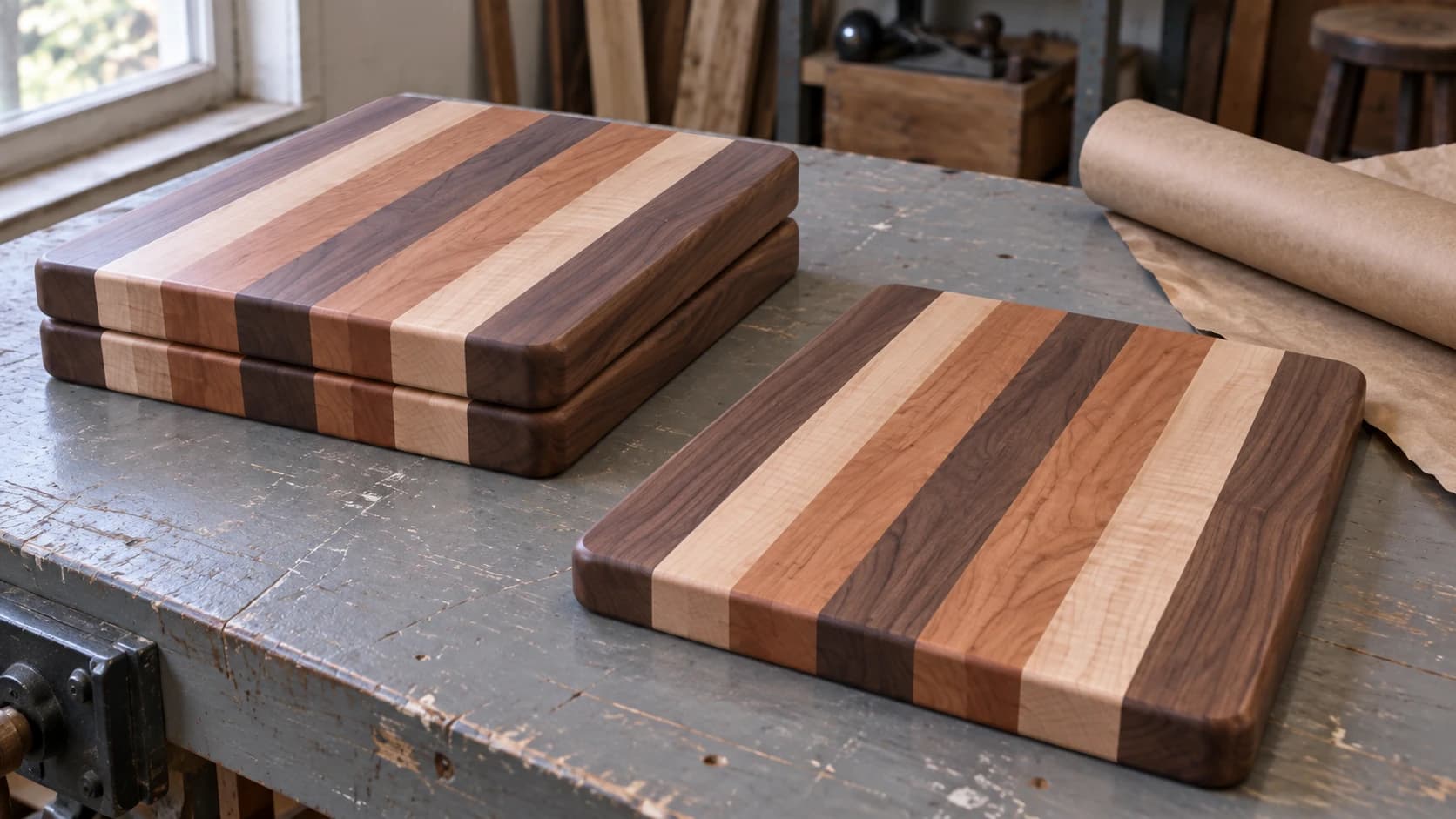
Every woodworker eventually hits the same wall. You build something genuinely good, a friend says "you should sell these," you list a few, and then nothing. Meanwhile someone else is moving fifty cutting boards a month with joinery you could do in your sleep.
The uncomfortable truth is that the market does not pay for the things that are the most fun to build. It pays for a fairly short list of practical objects, and it pays best when you produce them efficiently. This post is that list, with the honest version of the numbers attached: what materials cost, how long a piece really takes, what buyers typically pay, and how crowded each lane already is.
If you are still building your skills and just want good projects to make, our beginner woodworking projects post is the skills-first list. This one is the seller's lens.
Tip
Short answer: functional kitchen and organization pieces sell most reliably. Cutting boards, serving boards, wall organizers, and desk organizers move in volume online. Small furniture earns more per piece but sells best locally because shipping kills the margin.
The Filter: What Makes a Wood Project Sellable
Before the list, the filter. Four things decide whether a project can make money, and none of them is "how nice is it."
Materials as a fraction of price. As a made-up but realistic example: a board that costs you $18 in hardwood and lists at $70 can work. A coffee table that costs you $140 in walnut and lists at $300 usually cannot, once your hours enter the math.
Time per unit, including finishing. Sanding and finishing routinely take as long as the build. If a piece needs three coats with a day between them, that is calendar time your price has to cover.
Shippability. Weight and size decide where you can sell. A small cutting board ships in an ordinary box at a sane rate. A bench does not, which means your market shrinks to driving distance.
Saturation. Some categories have thousands of nearly identical listings. That does not make them dead, it makes them price-competitive, and you win there on photos, personalization, or a niche angle rather than on existing.
Here is how the common categories stack up. Treat every number as an illustrative estimate, not a promise: prices are typical asking prices you will see browsing handmade marketplaces, not guaranteed sale prices, materials assume lumber bought retail (hardwood for the indoor pieces, cedar or construction lumber for the outdoor rows), and build times count active work, not glue or finish drying:
| Project | Materials | Realistic build time | Typical asking price | Saturation |
|---|---|---|---|---|
| Edge-grain cutting board | $15 to $30 | 2 to 4 hours | $40 to $100 | Very high |
| End-grain cutting board | $30 to $60 | 5 to 8 hours | $100 to $250 | High |
| Serving / charcuterie board | $10 to $30 | 1 to 3 hours | $40 to $150 | Very high |
| Wall organizer (keys, mail, coats) | $10 to $25 | 2 to 4 hours | $40 to $120 | Medium |
| Desk organizer / monitor stand | $10 to $30 | 2 to 5 hours | $50 to $150 | Medium |
| Plant stand | $10 to $25 | 2 to 4 hours | $40 to $90 | Medium |
| Step stool | $15 to $35 | 3 to 6 hours | $60 to $150 | Low to medium |
| Console or side table | $40 to $100 | 6 to 15 hours | $150 to $400 | Low locally |
| Planter box / raised bed | $20 to $60 | 2 to 5 hours | $50 to $150 | Low locally |
Build times assume you have made the piece at least once before. Your first one will take a lot longer.
PRINT. CUT. CARVE.

- Multiple formats (SVG, DXF, PNG)
- Machine-tested designs
- Commercial licenses
Sponsored by PrintCutCarve.com
Cutting Boards: Saturated for a Reason
Cutting boards are about as crowded as woodworking categories get, and they still belong at the top of the list. People buy them constantly, as gifts, for weddings, for themselves, and a well-photographed hardwood board sells even with thousands of competitors on the same page.
The margin story splits by construction. Edge-grain boards are fast: mill, glue, flatten, round over, sand, oil. At two to four hours each, and faster in batches, they can clear a decent hourly rate at typical prices. End-grain boards look spectacular and often list at a multiple of comparable edge-grain boards, but the double glue-up and the flattening eat most of that premium in time.
The honest play here is batching. One board is a hobby. Six boards through the same milling, glue-up, and finishing stages take nowhere near six times the hours, and batch efficiency is the entire difference between profit and an expensive pastime in this category.
Warning
Anything that touches food needs a finish and glue labeled for food contact and moisture, usually food-grade mineral oil or an oil and beeswax blend over a water-resistant glue joint. The manufacturer's label is the final authority on food contact. If you want help decoding a label or choosing between options, ask Craft Chat, the free AI maker assistant, before you commit a batch.
Serving and charcuterie boards are the shortcut version: single slab, shaped edge, sometimes a handle, one to three hours of work. Margins per hour are often better than cutting boards. Saturation is just as brutal, so the listings that win are the ones with a distinct shape or a live edge, not the fifteenth identical paddle.
Organizers: The Quietly Profitable Middle
This is the category most sellers overlook, and it has the best ratio of demand to competition on this list. Nobody dreams about a mail organizer, which is exactly why fewer woodworkers make them, while plenty of buyers search for them.
The winners are compact and functional, the kind of thing that mounts on a wall or sits on a desk:
- Entryway organizers. Key hooks, a mail slot, maybe a shelf. Small material bill, ships flat or nearly flat.
- Desk organizers and monitor stands. The work-from-home market did not go away. A hardwood monitor stand with a phone slot sits in the sweet spot of low material cost and respectable price.
- Kitchen organizers. Spice racks, knife blocks, utensil holders. Same logic, endless small variations.
- Charging stations and docks. A block of walnut with well-placed slots and a cable channel reads as a premium object and uses offcuts you already have.
These pieces also batch beautifully, since most are straight cuts, dadoes, and screws or glue. The catch is that they compete partly with mass-produced versions, so the wood has to look like wood. Hardwood with a clean oil finish sells. Painted pine reads as something from a big-box shelf and prices accordingly.
Small Furniture: More Money, Smaller Market
Furniture is where woodworkers most want to play, and it can sell, with two big caveats: shipping and hours.
A side table or console table at typical asking prices of $150 to $400 sounds great until you count ten or more hours of building and finishing, plus material. The per-piece profit is real, but the hourly rate is often worse than a batch of boards. The pieces that dodge this trap are the small ones: plant stands, step stools, small benches, and nightstand-sized tables that build in an afternoon or two.
The bigger constraint is delivery. Furniture mostly sells locally: online marketplaces with local pickup, and in-person events. That is not a downside so much as a different game, and it is a game with far less price pressure, because a local buyer is comparing you to a furniture store rather than to three thousand other listings. If you go the in-person route, our craft fair selling guide covers the booth economics before you commit a weekend to it.
Step stools deserve a special mention. They are small enough to ship, sturdy builds are genuinely valued because buyers are often putting children on them, and the category is far less crowded than boards or decor.
Decor: Proceed With Eyes Open
Wooden signs, floating shelves, candle holders, picture frames. This category tempts every seller because the projects are easy, and that is exactly the problem. Easy to make means everyone makes it, and much of it competes directly with mass-produced decor at prices you cannot touch.
Two honest exceptions. Floating shelves sell steadily because buyers want specific sizes and real hardwood, and sturdy hidden-bracket mounting is a genuine differentiator. And personalized pieces escape the price race entirely, because a mass producer cannot make the one your buyer wants. Personalization is the strongest single lever a small woodworking business has, in any category on this page.
Outdoor and Garden: The Local Spring Business
Planter boxes, raised garden beds, and outdoor furniture are too heavy and bulky to ship at any sane price. That keeps most online sellers out and leaves the category wide open locally. Every spring, people who would never visit a craft marketplace go looking for raised beds.
Material is cheap since cedar and construction lumber do the job, builds are fast and tolerant, and buyers often order multiples. The trade-off is seasonality: this is a spring and early summer business, so treat it as one strong quarter, not a year-round line.
The Math That Decides Everything
Whatever you build, the same arithmetic decides whether it is a business or a hobby with revenue. Count all of it: wood, but also glue, sandpaper, finish, blades, and the packaging. Count all the time too, including sanding, finishing, photographing, listing, and packing. Then check the price the market will actually bear for your category, not the price your hours deserve.
Most wood projects fail this test, which is fine. You only need two or three that pass. Our pricing guide for handmade products walks the full formula, including the wholesale math if a local shop ever comes calling.
One more honest note: the sellers who make money in saturated categories almost never win on the woodworking. They win on the listing. Better photos, better titles, and keywords that match what buyers type. That part is fixable in an afternoon: ListingLab takes one photo of your finished piece and drafts the titles, descriptions, and search keywords, and it can generate clean styled product photos, at one credit per photo, when your only shot is on a dusty bench.
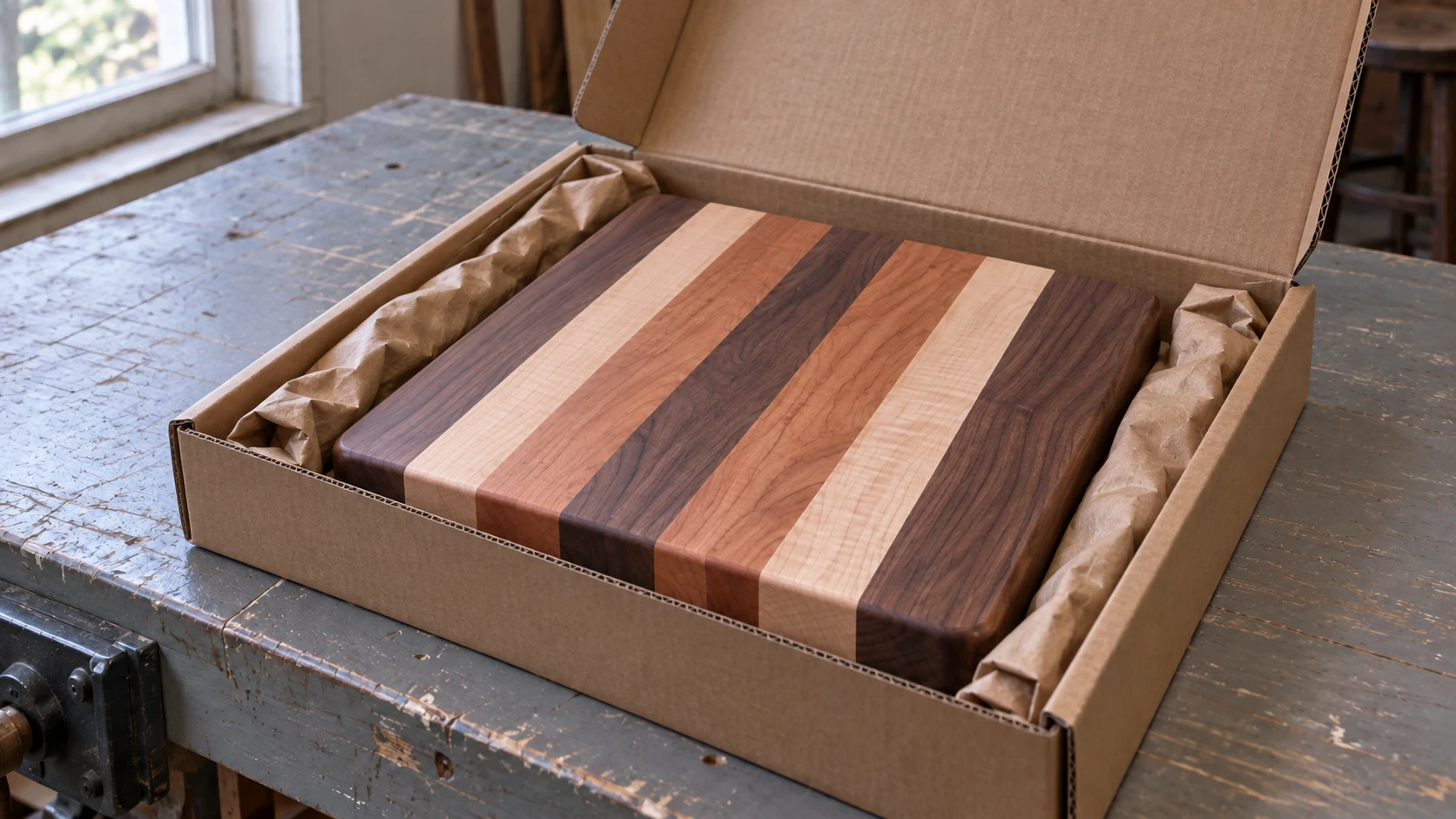
Packaging is part of the product. Leave room in your costing and workflow to protect the finished surface and keep the board from moving in transit.
Start With One
Pick one project from the table that fits your tools and your patience for repetition. Build a batch of three, not one, so you learn the batch rhythm early. Price it with real math. Photograph it in daylight.
Then let the tools carry the parts that are not woodworking. ListingLab writes the listing from your photo, and Craft Chat is there free when you hit a build question at the bench, whether that is a food-safe finish, a joinery choice, or which board to mill first. The market has room for another woodworker who ships. Go be that one.
Related Tools
Ready to try these tools?
Sign up free, no credit card required. Free tools available immediately.
Start Free